Creating Compelling Ad Copy: A Step-by-Step Guide
Most ad copy doesn’t fail because the design was bad. It fails because the message never matched what the audience actually needs to believe. If you want higher response from banners, flyers, and venue promotions, you need a repeatable writing process-not vibes.
When you search for “good ad copy,” you’re probably asking: What should I say first? How do I make a headline stop the scroll? Where does the call-to-action go? And-because people lie politely-how do I know my claims won’t backfire?
Persuasive communication isn’t magic; it’s structured attention and credibility. Marketing guidance from major reference sources consistently emphasizes audience relevance and clear value propositions (e.g., Campaign Monitor: Copywriting overview), and advertising best practices stress matching messages to intent (e.g., Google Ads: How to write ad copy). (Third-party URLs must include utm_source-see links throughout.)
By the end of this step-by-step guide, you’ll be able to draft ad copy that’s easier to approve, easier to track, and harder to misunderstand.
Table of contents
- Understanding the target audience
- Key components of persuasive ad copy
- Techniques for writing engaging headlines
- How to incorporate calls to action
- Examples of successful ad copy across different formats
- A quick diagnostic before you publish
Understanding the target audience
Everybody wants “more customers.” That’s not an audience. An audience is a specific group with a specific job to be done, at a specific moment in the decision cycle.
Step 1: Write the audience’s job, not your company’s
- Job to be done: What problem are they trying to solve right now?
- Decision moment: Are they comparing options, recovering from a bad experience, or simply browsing?
- Friction: What’s stopping them-price, trust, availability, confusion, timing?
Step 2: List the top 3 objections you must rule out
Objections are the hidden structure of ad copy. If you ignore them, your headline looks confident and your CTA looks desperate.
Examples of common objections in advertising/venue promotions:
- “Is this worth it?”
- “Is it reliable?”
- “Do they deliver / respond fast enough?”
Step 3: Match language to the audience’s mental model
Use the words people already use. If your audience thinks in terms of “availability,” don’t write “optimized logistics.” If they’re worried about “readability from the street,” don’t promise “premium visual performance.”
Key components of persuasive ad copy
Persuasive ad copy is a small system. Each element supports the next-headline earns attention, body clarifies value, proof reduces risk, and the CTA moves action forward.
1) Headline (the attention gate)
- States the core promise or benefit
- Signals relevance to the audience’s problem
- Minimizes ambiguity
2) Value proposition (the “why you” proof in plain language)
- What they get
- What outcome it enables
- Why it’s better (or simpler) than the alternatives
3) Proof (credibility without bragging)
- Quantifiable specifics (when true)
- Process clarity (“how it works”)
- Experience indicators that don’t require fantasy
4) Call to action (the action selector)
- One clear next step
- Low-friction instruction
- A concrete benefit of taking the step
5) Compliance/claims check (the “don’t get sued” gate)
Rule: if a claim can be disputed, it needs a conservative framing or supporting evidence you actually have. Advertising regulators and platform policies treat “too-good-to-be-true” claims harshly. (See: FTC: Advertising and Marketing?utm_source=amvnetwork.com and ASA: CAP/BCAP rules guidance?utm_source=amvnetwork.com.)
Techniques for writing engaging headlines
Headlines are not poetry. They’re decision-making aids.
Technique A: Use a specific benefit + a specific audience
Template: “[Benefit] for [Audience]“
- Example: “On-site signage that reads from the street”
- Example: “Flyers designed for fast approvals-no last-minute confusion”
Technique B: Lead with the problem, then the promise
Template: “Stop [Problem]. Get [Outcome].”
- Example: “Stop unclear specs from delaying your banner run. Get copy + layout ready for production.”
Technique C: Quantify when you can (and keep it true)
- “3-step proofing workflow”
- “Same-day layout review” (only if true)
Quantification is credibility. Manufactured numbers are poison.
Technique D: Make it scannable for real viewing conditions
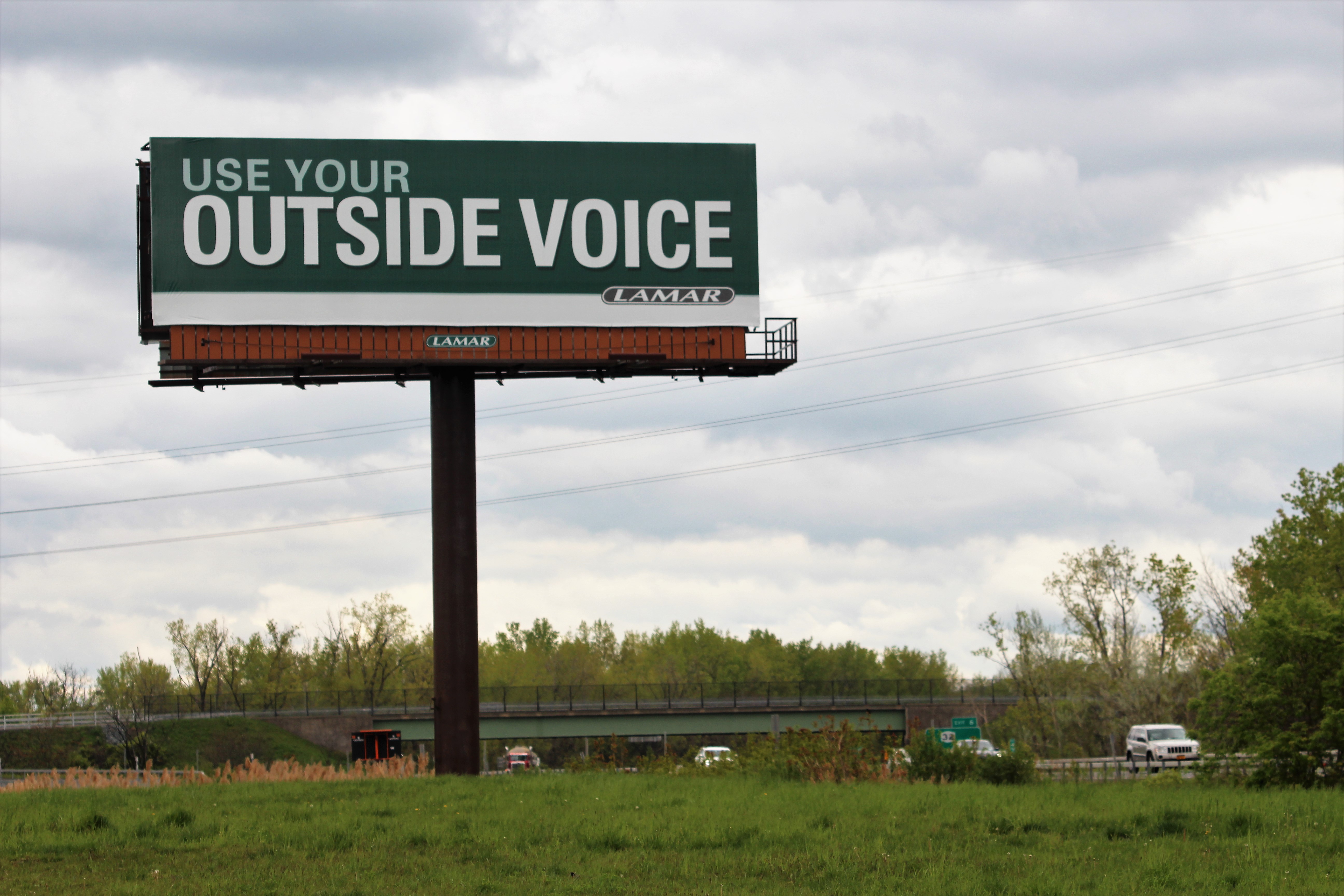
For outdoor and venue display, your headline competes with distance, lighting, and crowd noise. Use fewer concepts per line; prioritize the single strongest promise.
For a more structured approach to ad writing and messaging, you can also compare formats and guidance from official platform documentation such as Google’s ad copy best practices?utm_source=amvnetwork.com.
How to incorporate calls to action
A CTA is not a decoration. It answers: “What do I do next, exactly?”
Step 1: Choose one CTA goal per asset
- Book a consultation
- Request a quote
- Call now
- Scan a QR code
If you try to do three CTAs on one banner, you get none.
Step 2: Make the CTA instruction specific
- Weak: “Contact us”
- Better: “Email your dimensions for a production-ready layout”
- Weak: “Learn more”
- Better: “See banner sizing examples”
Step 3: Place the CTA where the eye can find it
In venue advertising, people don’t read-they sample. Keep your CTA near the conclusion of the promise, not buried at the bottom like a footnote.
Step 4: Keep the landing page consistent
Your CTA promise should match what the user sees after they click/scan. If your ad says “fast approvals,” the landing page must explain the review/approval process immediately.
If you want to see how services can be structured for clarity, browse Services.
Examples of successful ad copy across different formats
Below are practical examples written in the same message system: headline → value → proof → CTA. Replace the bracketed parts with your real offering.
Example 1: Banner (outdoor/venue)
- Headline: [Benefit] for [Audience]
- Value line: [What you deliver] in [timeframe or process promise]
- Proof: [Specific detail: format list, versions, proofing method]
- CTA: Scan for [offer] / Call [number]
Example 2: Flyer (hand-to-hand)
- Headline: Stop [problem]. Get [outcome].
- Body: 2-3 short lines that explain what’s included.
- Proof: “What you receive:” list of deliverables.
- CTA: “Request a quote” + what they should send.
Example 3: Brochure (more detail, more trust)
- Cover headline: [Outcome] for [audience]
- Inside section headings: “What’s included,” “How approvals work,” “What you need to provide.”
- CTA block: “Next step: send your dimensions + reference photos.”
Example 4: Radio spot (spoken copy)
Radio is copy under time pressure. Your script must establish: the problem, the solution, and the action-fast.
- First 5 seconds: identify the audience problem
- Middle: describe the solution in simple, concrete terms
- Last 5-7 seconds: CTA + timing + frequency
For more on message-to-production workflows, see related guides on /blog/.
A quick diagnostic before you publish
Run this checklist before you send the file to production or approve the copy:
- Can someone summarize the offer in one sentence?
- Is the headline relevant to the target audience’s current job?
- Did you rule out the top 3 objections?
- Is there exactly one clear CTA goal?
- Do your claims have evidence (or conservative framing)?
Conclusion
Compelling ad copy is built from structure, not luck: understand the audience’s job, write a headline that earns attention, support it with value and proof, and end with a specific next step. If you want fewer revisions, treat your ad like a production-ready brief: clear specs for message and action.
Next step: Draft your headline and CTA first. If those two are wrong, everything else is just decorative text.
External references: For foundational messaging and advertising guidance, see FTC advertising and marketing, Google Ads: ad copy best practices, and Campaign Monitor: copywriting overview.